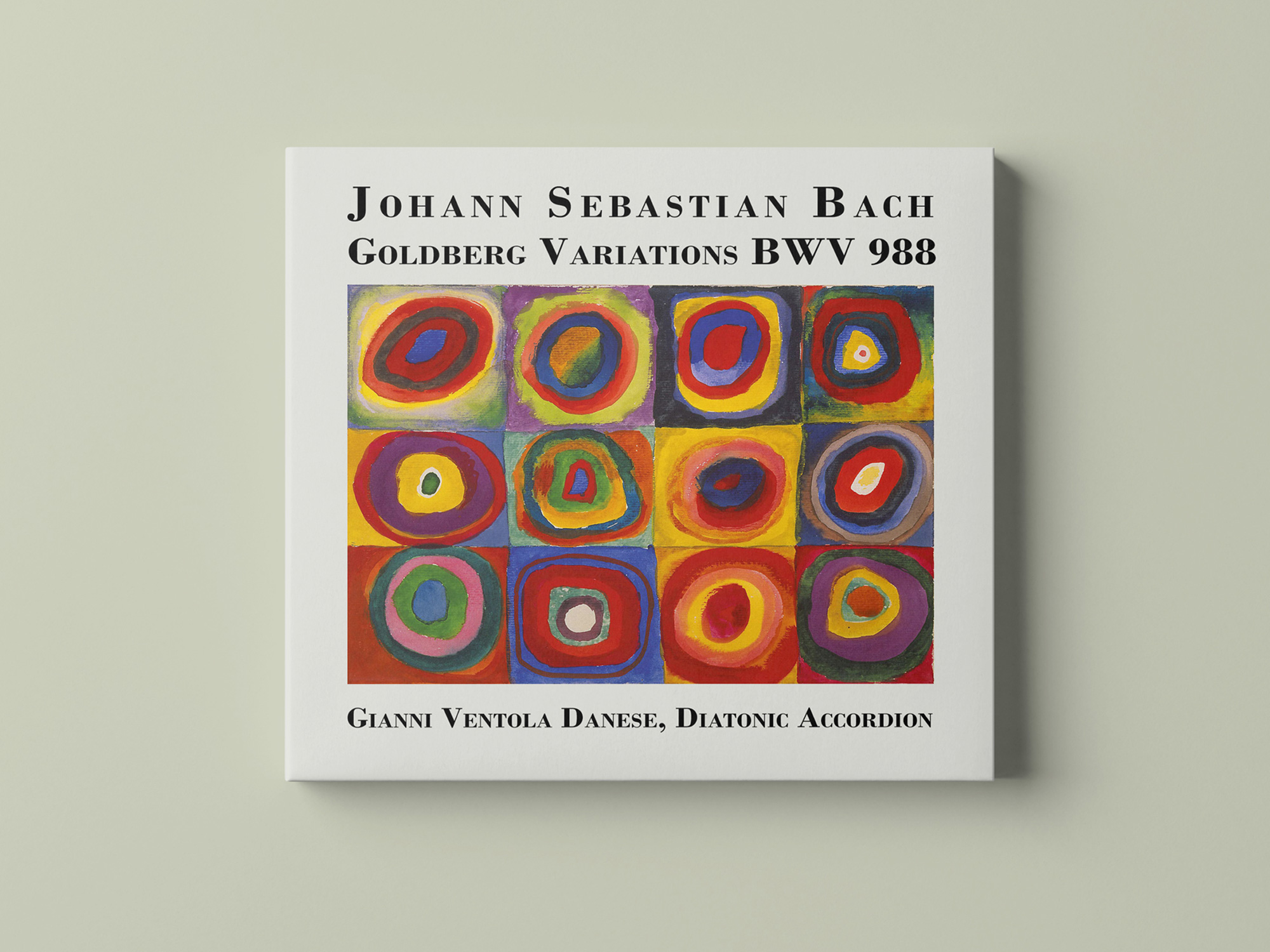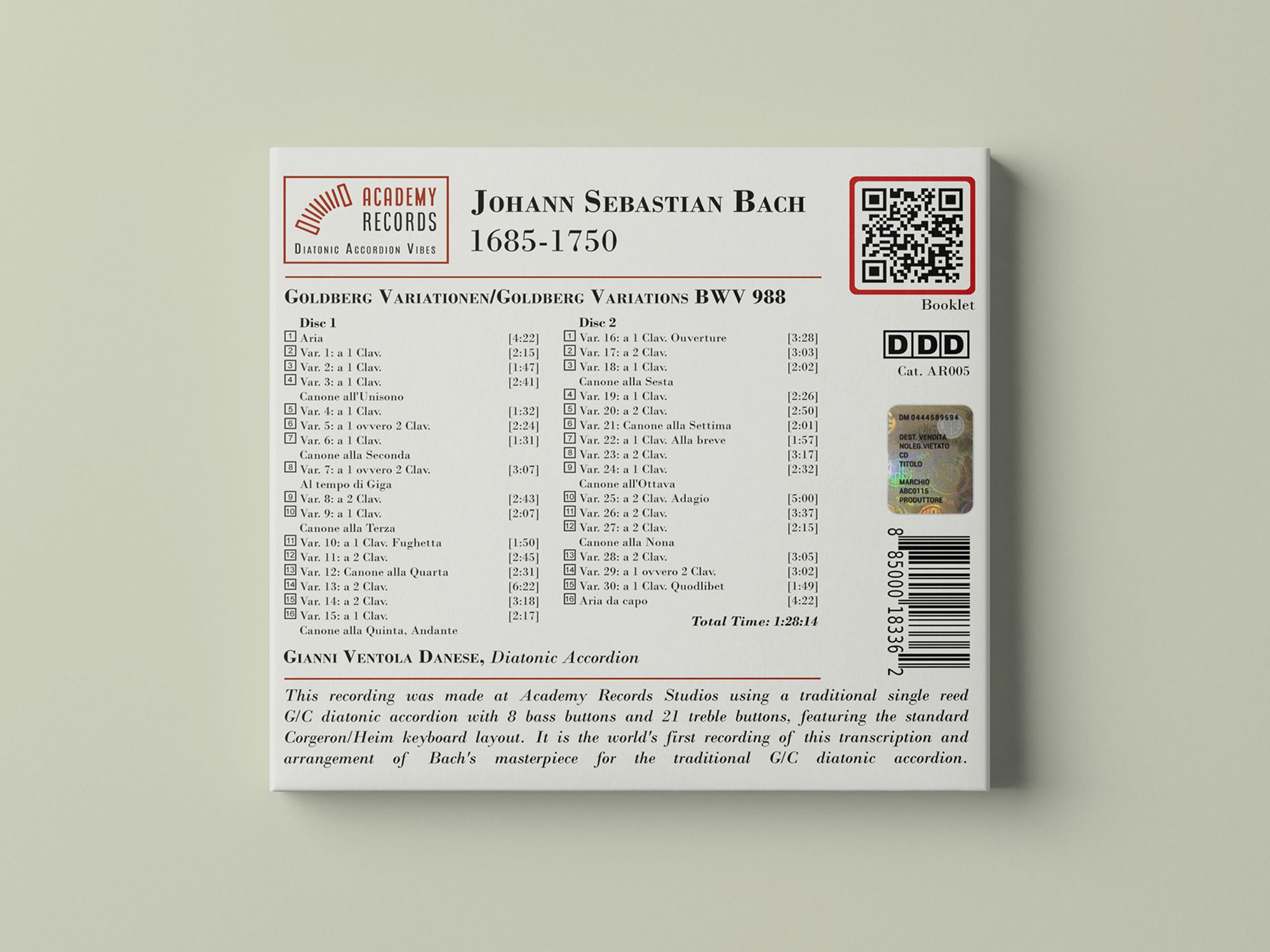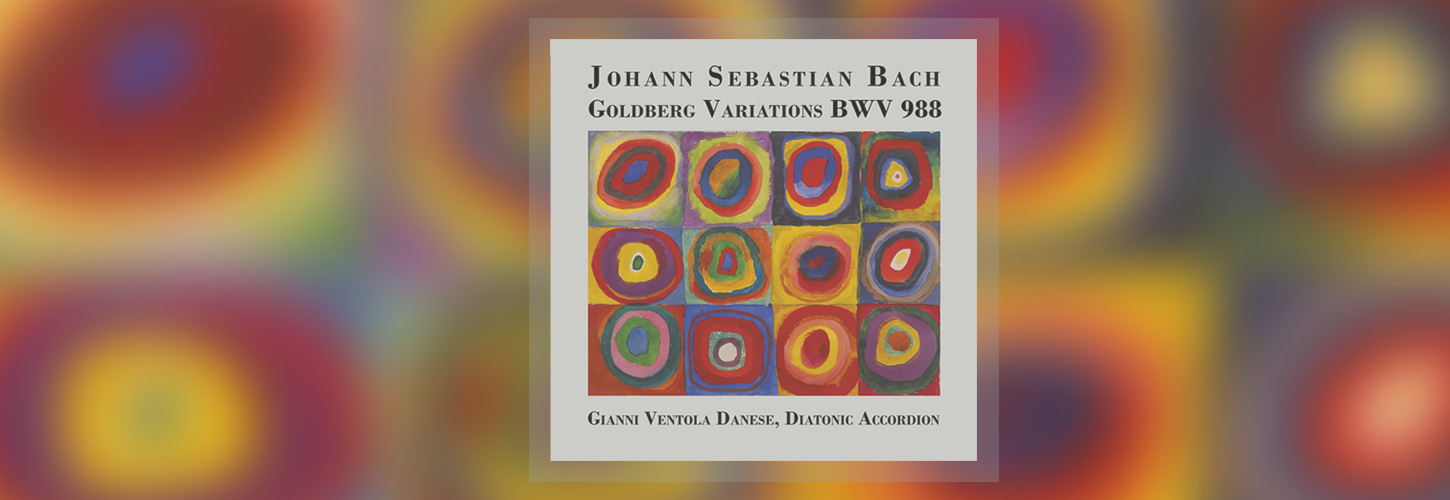



One of Bach’s most astonishing musical achievements lies in the very premise of the Goldberg Variations: a single theme followed by thirty variations, all rooted in the key of G major, yet unfolding with such extraordinary freedom and imagination that monotony never enters the listener’s experience. Across the work, Bach explores an almost inexhaustible spectrum of styles, contrapuntal structures, rhythmic characters and melodic inventions. Each variation reveals a new facet of the musical idea, while the architecture of the whole remains perfectly balanced. Nearly three centuries after its creation, the Goldberg Variations continue to stand as a living monument to the infinite expressive potential of music. The "Organetto", or Diatonic Accordion, was conceived, at least in Italy and in many other musical traditions, as an instrument essentially centred on a single tonal world: G major. This apparent limitation makes it, paradoxically, a remarkably natural instrument with which to approach Bach’s masterpiece. Goldberg Variations are presented here, for the first time, in an interpretation on this instrument.
Gianni Ventola Danese’s arrangement and adaptation of this Bachian masterpiece for Diatonic Accordion represents a further chapter in the ever-expanding history of the Goldberg Variations: a new exploration of the work through an instrument far removed from the harpsichord or piano. As a work of seemingly absolute and inexhaustible perfection, the Goldberg Variations have continually attracted musicians and ensembles of the most diverse kinds. Over the years, the composition has inspired remarkable interpretations for string trio and quartet, Baroque orchestra, organ, chromatic accordion, harp, classical guitar, brass quintet, marimba, flute, cimbalom—and even harmonica. The present recording adds the distinctive voice of the Diatonic Accordion to this extraordinary lineage of reinterpretations, bringing Bach’s music into a new sonic dimension while preserving the structural integrity and expressive depth of the original.
Published in 1741 as the fourth and final volume of the Clavier-Übung, Johann Sebastian Bach’s Goldberg Variations, BWV 988, occupy a place among the supreme achievements of his oeuvre and of the entire literature for keyboard. For almost three centuries, this extraordinary work has continued to fascinate performers, scholars and listeners alike. Its enduring power lies in Bach’s unique ability to unite uncompromising structural discipline with profound expressive intensity and an inexhaustible wealth of invention. Within the rigorous architecture of the thirty variations, every musical gesture acquires its own character, perspective and purpose. The result is a work of extraordinary breadth and refinement—at once intellectually compelling and deeply human—and one that continues to reveal new dimensions with every encounter.
According to the celebrated account related by Johann Nikolaus Forkel, Bach’s first biographer, the Goldberg Variations were commissioned by Count Hermann Carl von Keyserlingk to provide music for the sleepless nights of the young harpsichordist Johann Gottlieb Goldberg. Although this story has become firmly established in the traditional narrative surrounding the work, its historical reliability is no longer accepted by modern scholarship. What remains beyond dispute, however, is the extraordinary stature of the composition itself. Far from being merely a collection of variations, the Goldberg Variations stand as one of the most ambitious artistic and intellectual projects ever conceived by Bach—a work in which architectural perfection, contrapuntal mastery and boundless invention converge on an almost unparalleled scale.
The entire cycle unfolds from a simple thirty-two-bar Aria, contemplative in character and shaped after the model of the sarabande. Contrary to what one might expect, the thirty variations do not develop the melody of the Aria itself. Instead, they are built upon its bass line and harmonic progression, which remain constant throughout the entire work. Upon this remarkably stable foundation, Bach constructs a musical universe of extraordinary richness and diversity. Dances, fughettas, two-part inventions, virtuosic toccatas, lyrical passages, moments of profound spiritual intensity and supreme contrapuntal mastery coexist within an architecture of astonishing coherence. It is this interplay between constancy and infinite transformation that gives the Goldberg Variations their singular power: beneath the ever-changing surface of the music, the same harmonic foundation remains present, binding the entire cycle into a work of unparalleled unity and invention.
The organization of the work follows a precise and highly refined formal design. Every third variation is a canon, and with each successive canon Bach gradually increases the interval of imitation, progressing from the unison all the way to the ninth. This extraordinary sequence stands as one of the supreme demonstrations of Bach’s contrapuntal genius. At once rigorous and profoundly imaginative, it lends the entire cycle an exceptional sense of internal coherence, transforming its intricate architecture into one of the most remarkable achievements in the history of Western music.
The central turning point of the composition comes with Variation No. 16: a decisive moment of renewal, almost a new beginning, heralded by a majestic French Overture that symbolically opens the second half of the cycle. After a gradual intensification of technical complexity and expressive depth, the work reaches its emotional summit in the celebrated Variation No. 25, often described as the “Black Pearl” of the Goldberg Variations. Intense, melancholy and saturated with chromaticism, it is widely regarded as one of the most profound and introspective pages in the whole of Bach’s oeuvre—a moment in which the composer’s extraordinary mastery gives way to an almost unfathomable depth of expression.
The conclusion of the work holds one final surprise. Instead of the expected Canon at the tenth, Bach introduces a Quodlibet: a composition woven from several German folk melodies, following a tradition that, as Forkel relates, was customary at gatherings of the Bach family. After this playful and unexpectedly human interlude, the return of the opening Aria (Aria da capo) brings the cycle to a close with a profound sense of symmetry. The listener is left with the feeling of having travelled through an entire musical universe, only to arrive once again at the point of departure—yet transformed by the journey, and hearing the opening Aria with an entirely new awareness.
The Goldberg Variations also bear witness to Bach’s profound fascination with order, proportion and symmetry—principles that permeate the intellectual and artistic culture of the Baroque. Numerous scholars have drawn connections between the work’s architecture and the conception of a universe governed by mathematical and harmonic laws, a vision rooted in Pythagorean thought and given scientific expression in the cosmological theories of Johannes Kepler. While the symbolic significance of certain numerical aspects of the work remains a subject of scholarly debate, there can be no doubt that Bach conceived this cycle with an extraordinary degree of structural awareness. Here, art, science and spirituality appear to converge, merging into a single language of remarkable intellectual and expressive power.
Even today, the Goldberg Variations remain one of the most compelling interpretative challenges in the entire repertoire. Every new performance reveals a different perspective, demonstrating how this work, despite the perfection of its construction, continues to disclose new meanings with each encounter. It is precisely this extraordinary union of formal discipline, creative freedom and profound emotion that places the Goldberg Variations among the supreme monuments of Western music. Nearly three centuries after their creation, they remain as inexhaustible as ever—an enduring testament to the limitless possibilities of musical expression.
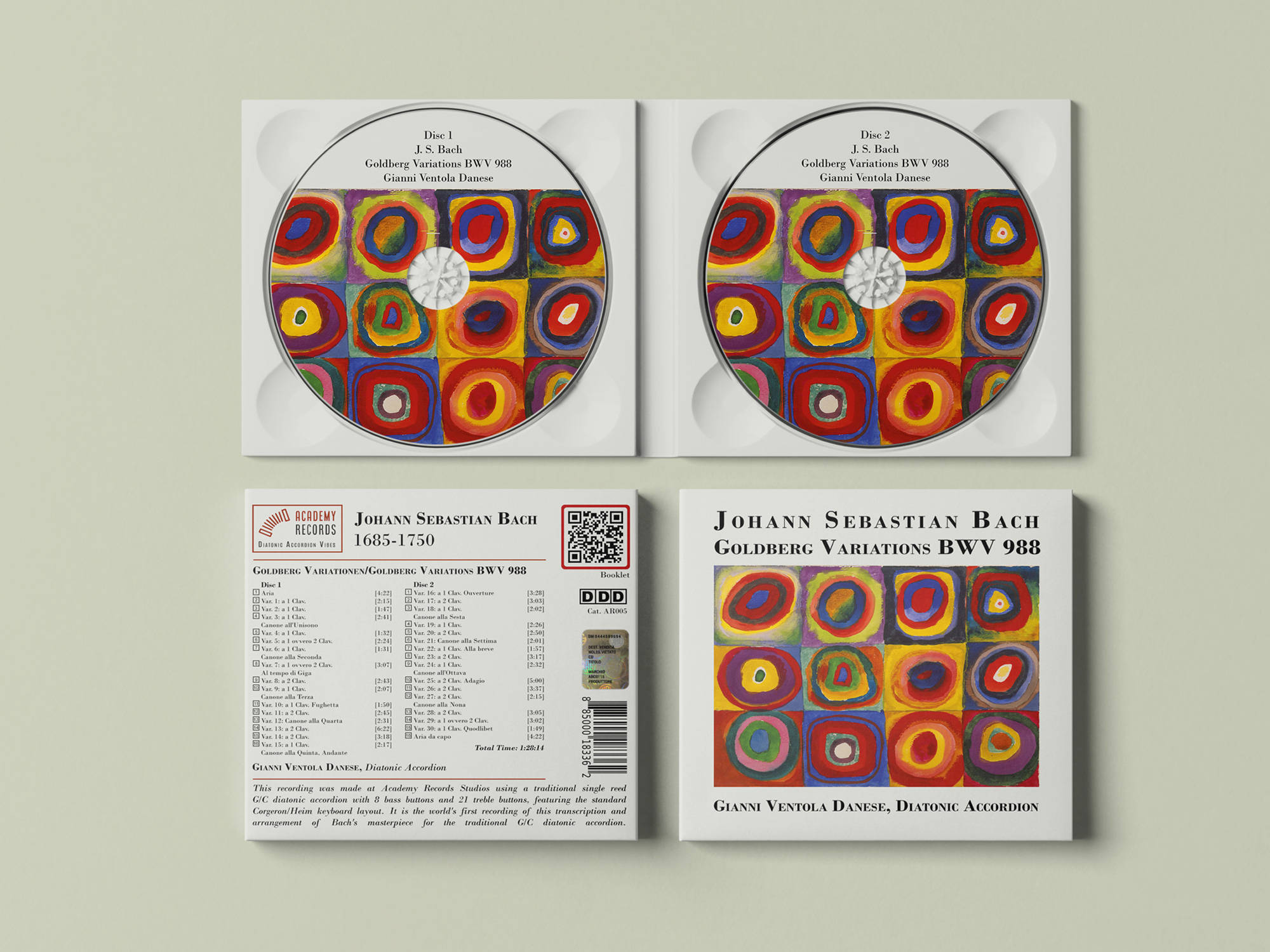
Now available in Digital Album and soon in limited edition Compact Disc.